The global textile industry is making a major leap forward in environmental protection with 2026 waterless and low‑carbon dyeing technologies. Traditional dyeing consumes massive amounts of water and energy, but next‑generation innovations are revolutionizing textile coloring while meeting global sustainability standards.
Key Technological Breakthroughs
1.Super Waterless Pigment Dyeing
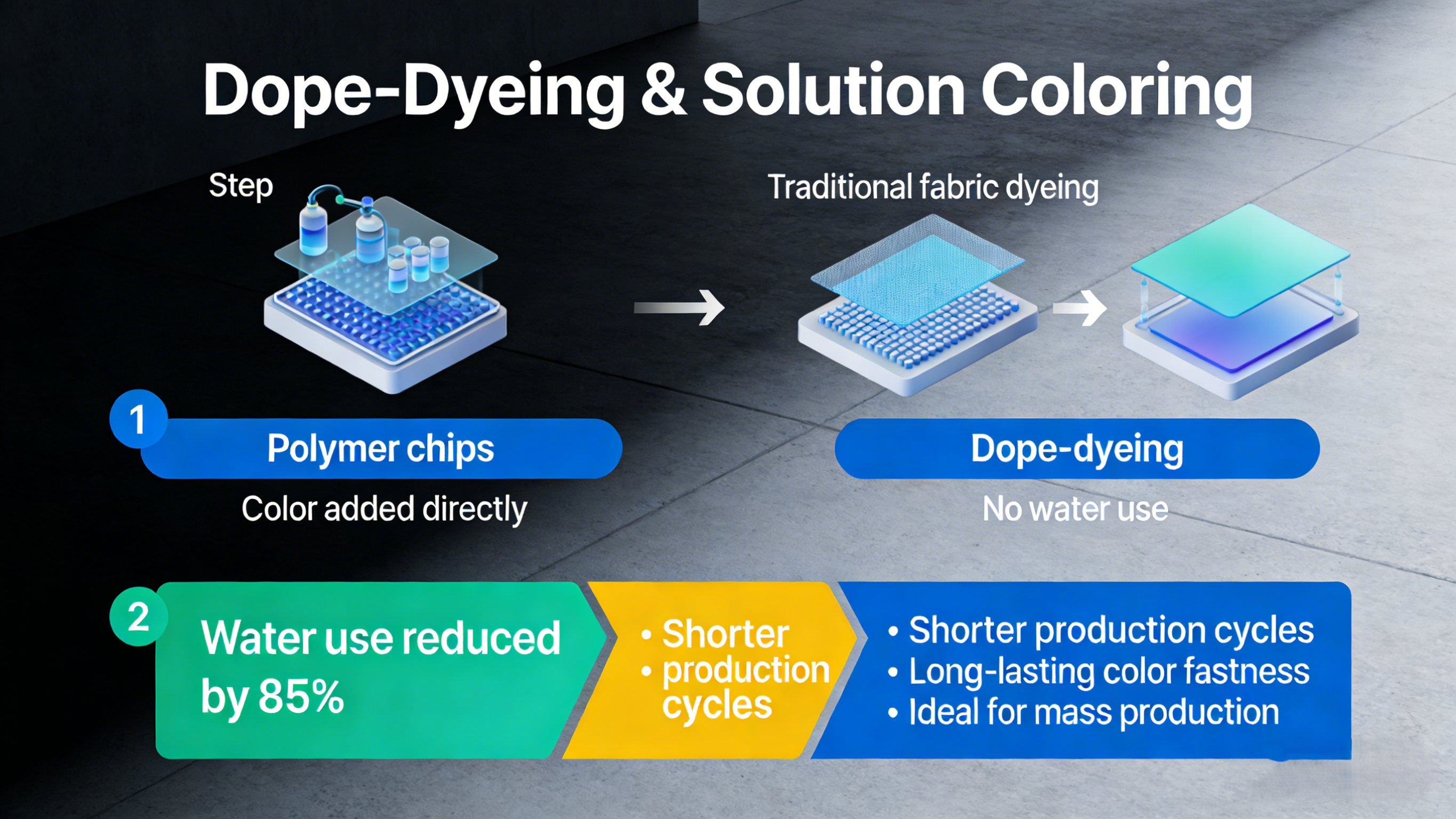
New water‑free dye systems cut water usage by up to 96% compared with traditional processes. No high‑temperature heating or rinsing is needed, greatly reducing energy consumption and carbon emissions while delivering stable, wash‑resistant color.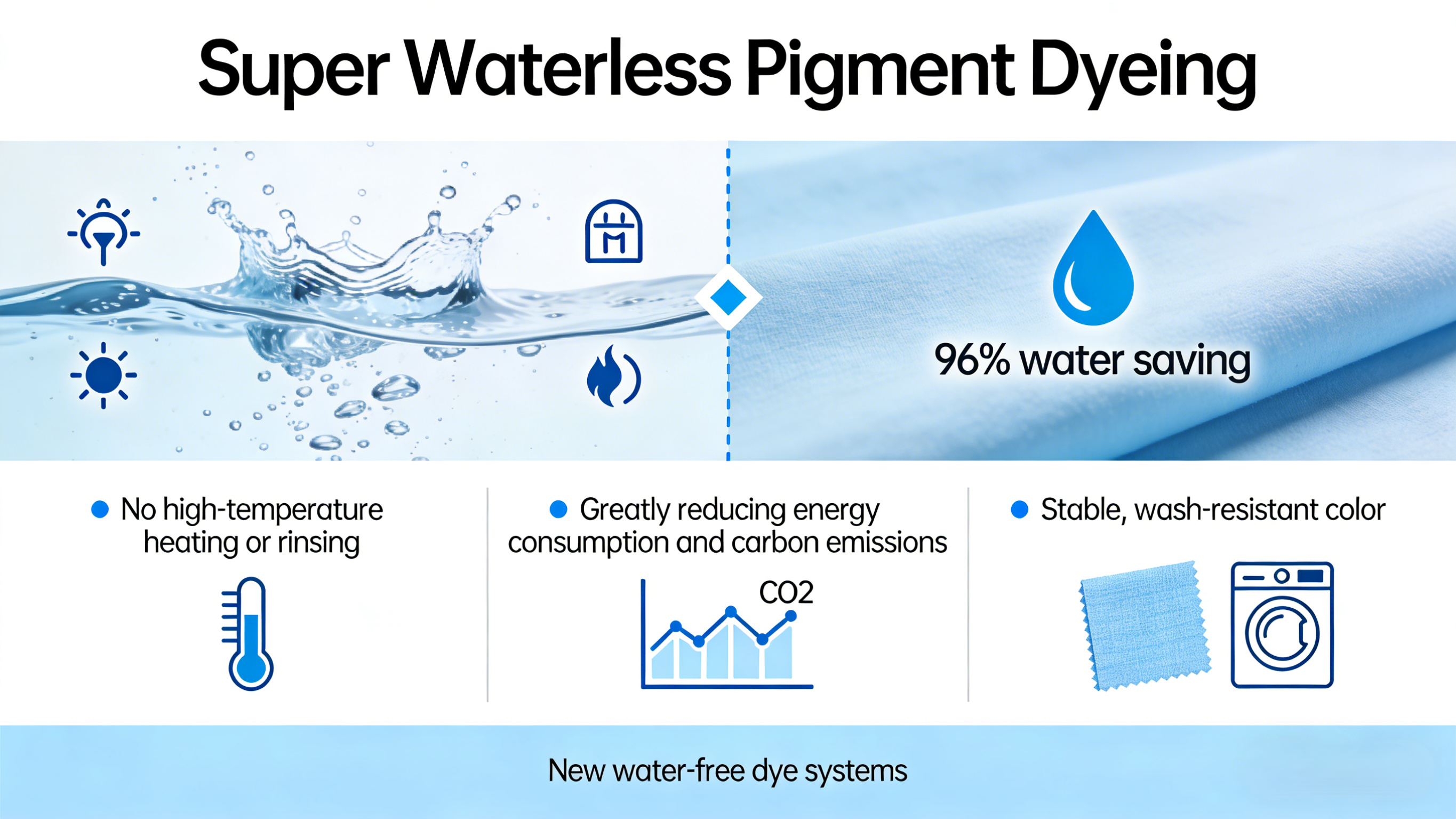 2.Dope‑Dyeing & Solution ColoringColor is added directly to polymer chips during fiber production, rather than dyeing finished fabric. This method reduces water use by 85%, shortens production cycles, and ensures long‑lasting color fastness ideal for mass production.
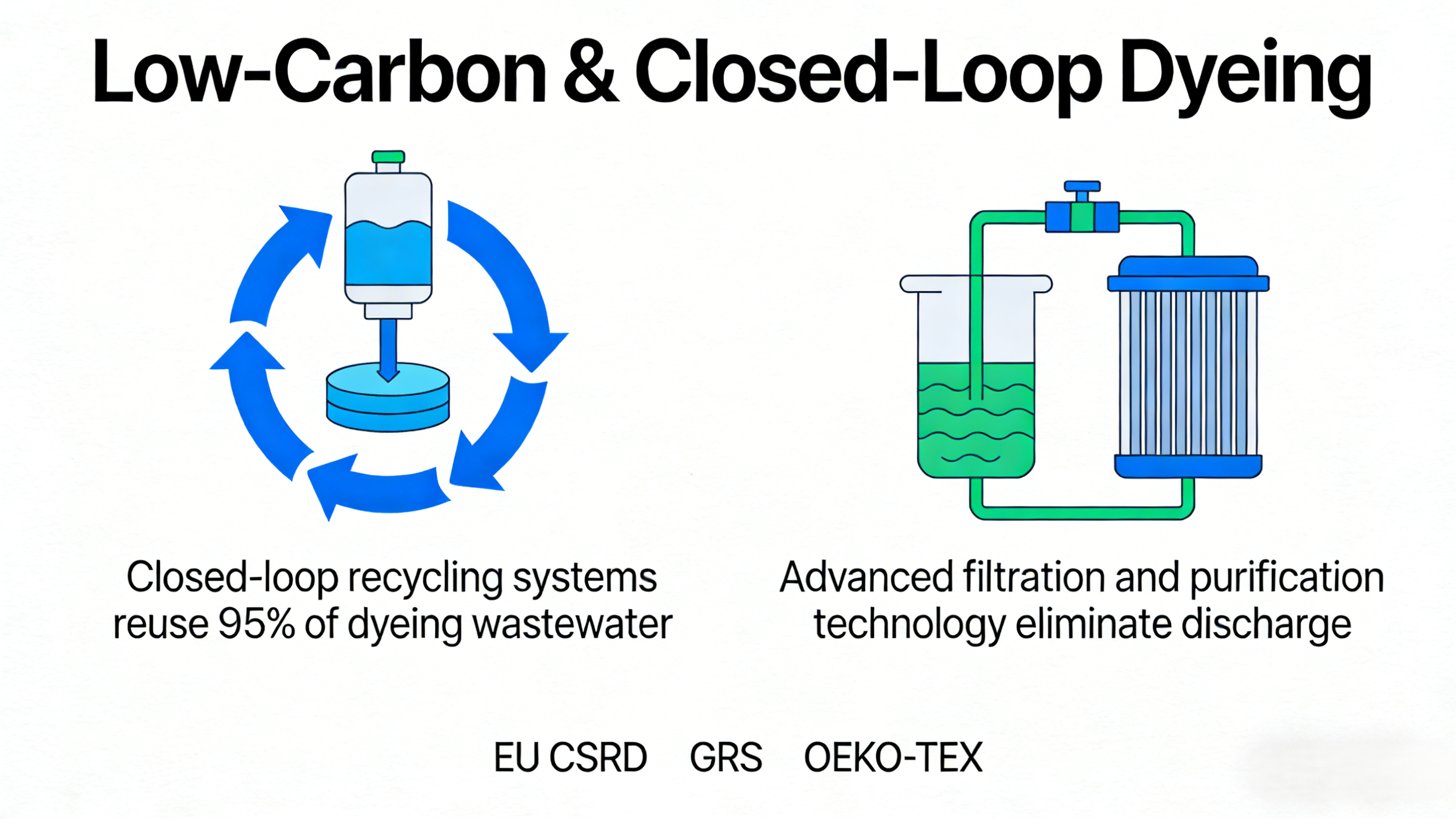
 3.Low‑Carbon & Closed‑Loop DyeingClosed‑loop recycling systems reuse 95% of dyeing wastewater. Advanced filtration and purification technology eliminate discharge, helping factories comply with EU CSRD, GRS, OEKO‑TEX and other global certifications.
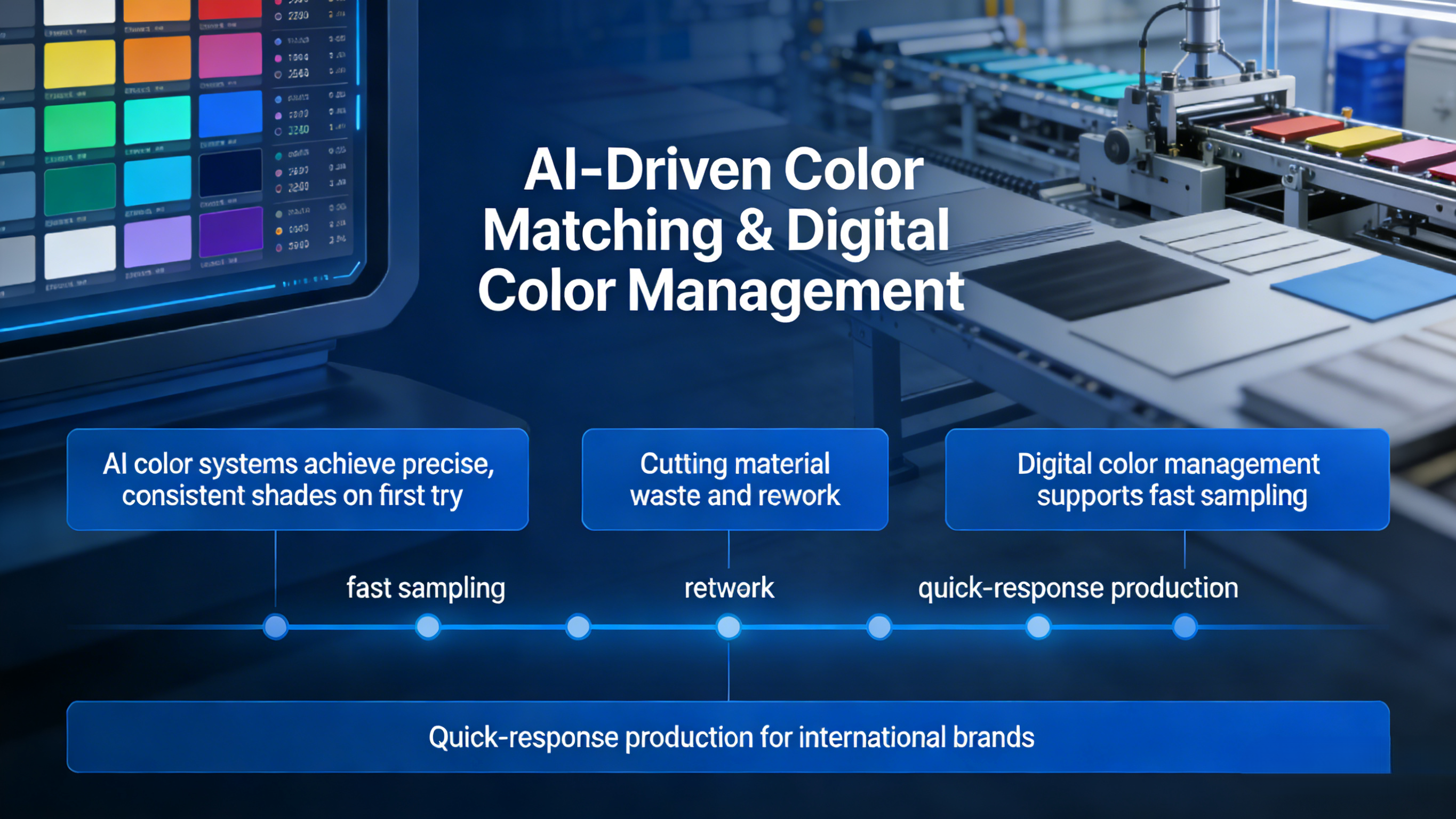
 4.AI‑Driven Color MatchingAI color systems achieve precise, consistent shades on first try, cutting material waste and rework. Digital color management supports fast sampling and quick‑response production for international brands.
 Our Production UpgradeWe have adopted waterless and low‑carbon dyeing technologies to offer eco‑friendly, high‑quality fabric solutions for OEM & ODM partners. These innovations reduce environmental impact while improving cost efficiency and delivery speed.

